.webp)
'No hawker eviction this month', orders Calcutta HC in Raliway land encroachment case
.gif)

Download Mobile App 






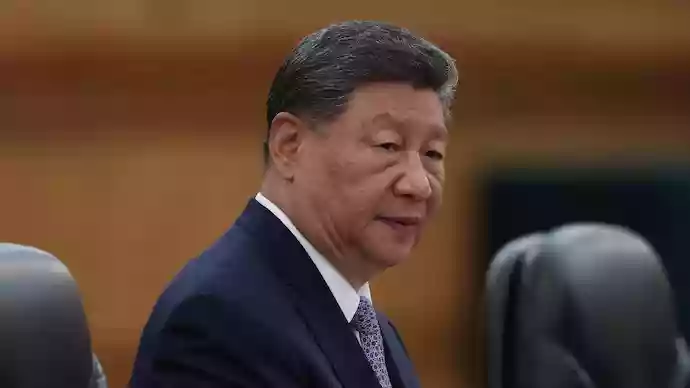
China has announced a new "K visa" category, a strategic move aimed at attracting young and highly skilled professionals in the fields of Science, Technology, Engineering, and Mathematics (STEM) from all over the world. The decision, which amends existing regulations on the administration of foreigners’ entries and exits, will take effect on October 1, 2025. This new visa category is being widely viewed as a direct countermeasure to the recent US policy changes, which have made the H-1B visa significantly more expensive and restrictive.
The introduction of the K visa is timed to capitalize on the uncertainty created by the US’s new visa policies. Earlier this week, the US announced a steep $100,000 annual fee on H-1B visa applications, a move that has caused widespread concern and anxiety among Indian and other South Asian tech workers. China, in a move seen as a strategic opportunity, has streamlined its own visa route to attract professionals who may be reconsidering their career options in America.
According to a statement from the Chinese Ministry of Justice, the K visa is designed for "young scientific and technological talents" who hold a bachelor's degree or higher in STEM fields from a recognized university or research institution, either in China or abroad. The visa will also be available to young professionals engaged in teaching or research at such institutions. Applicants will need to meet specific qualifications and provide supporting documents, which will be detailed on the websites of Chinese embassies and consulates.
One of the most significant advantages of the K visa is its flexibility compared to China's existing 12 ordinary visa categories. Unlike most work visas, the K visa does not require applicants to have a domestic employer or a Chinese entity to issue an invitation. This streamlined application process is expected to be less restrictive and more attractive to international talent.
Furthermore, K visa holders will enjoy greater freedom and opportunities once they enter China. They will be permitted to participate in a wide range of activities, including academic and cultural exchanges, scientific and technological collaborations, as well as entrepreneurial and business ventures. This broad scope of permitted activities signals Beijing's intent to become a hub for global innovation and research.
Analysts believe that China is making a bold pitch to compete for global talent, a race that has long been dominated by the US and European countries. While it remains to be seen whether the K visa can match the prestige of a US visa, it offers a more flexible and less bureaucratic route for skilled workers who are looking for international opportunities without prohibitive costs or lengthy processes. The K visa represents China’s most direct effort to position itself as a major destination for young, talented professionals.










 West Bengal
 Bihar
Bihar Uttar Pradesh
 Jharkhand